Engineer Enterprise Block Ecosystems Natively With The WordPress Block Editor
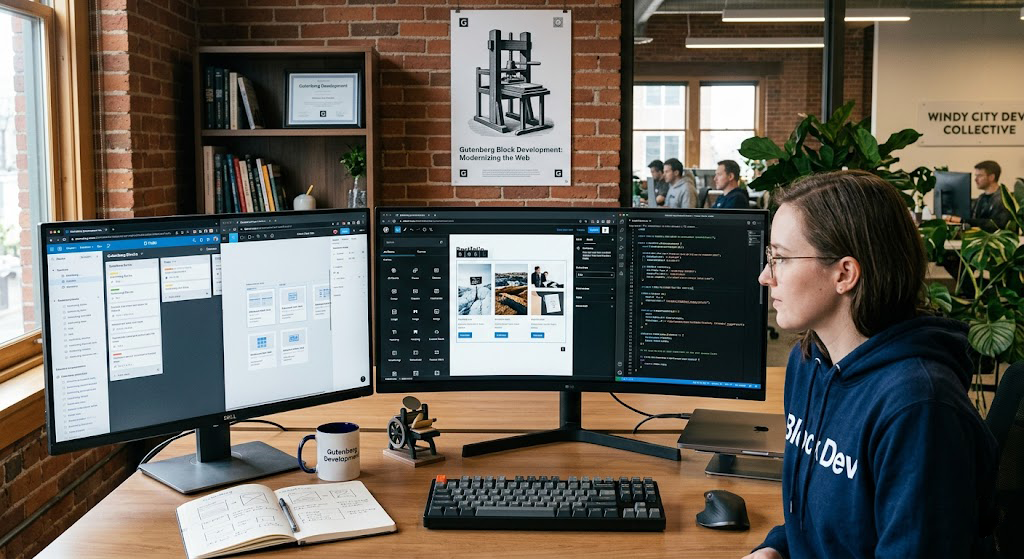
Say goodbye to sluggish rendering engine overrides and broken formatting. We build custom, component-based WordPress structures powered natively by Gutenberg block architectures. By translating your brand guidelines into lightweight, modular custom block libraries, your content creators gain fluid, real-time visual editing controls while your site preserves flawless front-end performance.
Component-Driven Engineering. The Setup.
How we translate complex layout designs and creative visual concepts into modular, drag-and-drop native block panels.
Atomic Modeling
We analyze your layout design blueprints, breaking them down into reusable UI components, layout sections, typography grids, and block parameters.
Ecosystem Blueprinting
Our team configures theme.json tokens, sets up conditional visibility rules, maps block variations, and secures global pattern pathways.
Block Coding
We write clean custom blocks using native WordPress APIs, blending React-driven edit structures with asset-optimized, valid HTML5 frontend blocks.
Vitals Validation
Following detailed core web performance audits and user editing tests, your native block theme launches with elite page speeds.
Why Scalable Marketing Teams
Choose MockupToWP
We eliminate visual layout decay by swapping heavy third-party page builders for secure, lightweight, block-based codebases.
Atomic Block Library
Every module is hand-coded as an independent, optimized asset, giving creators complete layout flexibility without design breakdown risks.
01theme.json Standardization
We anchor your global design tokens—colors, spacing, and font arrays—directly into the editor schema, preventing random visual overrides.
02Blazing Rendering Speed
By loading styling assets condition-by-condition only when blocks are present on a page, frontend rendering stays incredibly fast.
03Template Locking Rules
We apply strict user permission guards to specific post layouts, keeping critical core branding elements completely secure from deletion.
04Semantic SEO Output
Clean header nesting structures and semantic markup streams flow directly to crawling algorithms, improving organic indexation tracking.
05Native Code Portability
Our frameworks use native WordPress APIs without relying on external plugins, making code maintenance over time easy.
06Frequently Asked Questions
Everything you need to know about our custom Gutenberg block architectures and native layout development.
Third-party visual page builders inject deep DOM nesting, asset bloat, and security footprints. Native Gutenberg structures run directly within the WordPress core framework, processing clean semantic assets that ensure maximum page loading metrics and long-term theme durability.
Yes. Using theme.json tokens and granular layout permission locking, we can disable arbitrary color picker tools, restrict block reordering on crucial structures, and enforce fixed padding rules across your content editing teams.
We leverage both methodologies depending on project requirements. For complex, highly interactive interfaces, we build custom blocks using native JavaScript, React, and the Block Validation API. For rapid, content-driven layouts, we build secure components using the ACF Blocks framework.
Because our front-end engineers develop strictly inside core WordPress block lifecycles, lifecycle parameters, and semantic core structures, your theme layouts remain fully compatible with upcoming WordPress core updates.
Yes. We specialize in refactoring unoptimized, broken page builder databases into clean, semantic custom block systems, migrating all historical content assets safely without losing search visibility.
Convert Static Design Interfaces Into A Native, High-Speed Gutenberg System
Provide your design components, style assets, or system mockups below. Our lead frontend engineer will audit your files and deliver an architectural roadmap within 24 hours.
Initiate Block Blueprint
Provide your system parameters below to define architectural requirements.